

Log in
300 ng/mL (Urine)
Cocaine is a powerful central nervous system stimulant derived from the leaves of the coca plant. Although it has limited medical use in certain specialized procedures, it is primarily known as an illicit drug with a high potential for abuse and addiction. Cocaine produces an intense but short-lived feeling of euphoria by increasing dopamine levels in the brain, often leading users to take repeated doses.
People commonly use cocaine by snorting, smoking crack cocaine, or injecting it intravenously. Repeated use can rapidly lead to physical and psychological dependence.
Increased energy and alertness
Euphoria and overconfidence
Rapid heart rate
Elevated blood pressure
Decreased appetite
Anxiety and irritability
Restlessness
Strong drug cravings after the effects wear off
Long-term abuse may increase the risk of heart attack, stroke, depression, memory problems, and substance use disorder.
Coke, Blow, Snow, Flake, Crack, Rock, Yayo, Nose Candy, White, Dust.
Cocaine metabolites are typically detectable in urine for 2–4 days after occasional use, although chronic or heavy users may remain positive for a longer period
1,000 ng/mL (Urine)
Amphetamines are stimulant drugs that affect the central nervous system by increasing dopamine and norepinephrine activity in the brain. Certain amphetamine medications are prescribed to treat conditions such as ADHD and narcolepsy, but misuse can result in dependence and addiction.
Increased alertness
Higher energy levels
Reduced fatigue
Decreased appetite
Rapid heartbeat
Elevated blood pressure
Difficulty sleeping
Anxiety and mood changes
Long-term misuse may contribute to severe weight loss, depression, paranoia, memory problems, and stimulant use disorder.
Speed, Uppers, Bennies, Black Beauties, Pep Pills, Dexies, Beans, Addys.
Amphetamines are generally detectable in urine for 2–4 days after use
1,000 ng/mL (Urine)
Methamphetamine is a powerful and highly addictive stimulant that affects the central nervous system. It rapidly increases dopamine levels, producing intense euphoria, increased energy, and heightened alertness. Long-term misuse can cause serious physical and psychological health problems.
Increased energy
Euphoria
Rapid heartbeat
Elevated blood pressure
Decreased appetite
Insomnia
Anxiety
Aggressive behavior
Long-term abuse may cause severe weight loss, paranoia, hallucinations, memory impairment, and permanent neurological damage.
Meth, Crystal Meth, Crystal, Ice, Glass, Tina, Speed, Crank, Chalk, Shabu.
Methamphetamine is generally detectable in urine for 2–5 days after use
50 ng/mL (Urine)
Marijuana, also known as cannabis, contains Delta-9-tetrahydrocannabinol (THC), the primary psychoactive compound responsible for its mind-altering effects. It affects memory, concentration, coordination, reaction time, and judgment.
Relaxation
Euphoria
Increased appetite
Altered perception of time
Poor concentration
Slower reaction time
Reduced coordination
Anxiety or paranoia
Long-term use may impair memory, learning ability, motivation, and cognitive performance.
Weed, Pot, Ganja, Grass, Mary Jane, Herb, Bud, Reefer, Blunt, Chronic.
THC metabolites are generally detectable in urine for 3–30 days, depending on frequency of use
300 ng/mL (Urine)*
Methadone is a long-acting synthetic opioid primarily prescribed for the treatment of opioid dependence and the management of chronic pain. When used under medical supervision, it helps reduce withdrawal symptoms and cravings in individuals recovering from opioid addiction. However, misuse of methadone can lead to dependence, respiratory depression, overdose, and even death.
Pain relief
Relaxation
Drowsiness
Slowed breathing
Constricted pupils
Nausea
Dizziness
Reduced reaction time
Long-term misuse may lead to opioid dependence, overdose, respiratory failure, and severe withdrawal symptoms.
Methadose, Done, Dolls, Fizzies, Juice, Amidone.
Methadone is generally detectable in urine for 3–7 days after use
500 ng/mL (Urine)*
Please verify the cutoff concentration using the official Package Insert (IFU) before publishing.
MDMA (3,4-Methylenedioxymethamphetamine), commonly known as Ecstasy or Molly, is a synthetic psychoactive drug with both stimulant and hallucinogenic properties. It increases serotonin, dopamine, and norepinephrine activity in the brain, producing feelings of euphoria, emotional closeness, increased energy, and enhanced sensory perception.
MDMA is commonly taken as tablets, capsules, or powder and is frequently associated with parties, concerts, and nightclubs. Misuse can lead to dehydration, overheating, cardiovascular complications, and long-term effects on memory and mood.
Euphoria
Increased energy
Emotional warmth
Enhanced sensory perception
Increased heart rate
Elevated body temperature
Jaw clenching
Anxiety or confusion
Long-term or repeated use may contribute to depression, memory impairment, sleep disturbances, anxiety disorders, and damage to serotonin-producing nerve cells.
Ecstasy, Molly, E, X, XTC, Adam, Beans, Rolls, Disco Biscuits, Hug Drug.
MDMA is generally detectable in urine for 2–4 days after use
2,000 ng/mL (Urine)
Opiates are drugs derived from the opium poppy and include substances such as morphine, codeine, heroin, and opium. They are commonly prescribed for pain relief but have a high potential for misuse and addiction.
Pain relief
Relaxation
Drowsiness
Euphoria
Slowed breathing
Nausea
Constricted pupils
Reduced reaction time
Long-term misuse may result in opioid dependence, withdrawal symptoms, overdose, and respiratory depression.
Smack, H, Horse, Junk, Brown Sugar, China White, Black Tar, Dope, Skag.
Opiates are generally detectable in urine for 2–4 days after use
100 ng/mL (Urine)
Oxycodone is a prescription opioid analgesic used to treat moderate to severe pain. Although highly effective when used as prescribed, it has significant abuse potential because it produces feelings of relaxation and euphoria. Misuse can rapidly lead to tolerance, dependence, addiction, and overdose.
Pain relief
Euphoria
Drowsiness
Relaxation
Slowed breathing
Nausea
Constricted pupils
Dizziness
Long-term misuse may result in opioid use disorder, respiratory depression, overdose, and death.
Oxy, OCs, Roxies, Blues, Percs, Hillbilly Heroin.
Oxycodone is generally detectable in urine for 2–4 days after use
300 ng/mL (Urine)*
Please verify the cutoff concentration using the official Package Insert (IFU) before publishing.
Propoxyphene is a synthetic opioid pain medication that was previously prescribed for mild to moderate pain. Due to serious safety concerns, including potentially fatal heart rhythm abnormalities and overdose risk, it has been withdrawn from many markets. Despite this, screening for propoxyphene may still be required in forensic, workplace, and clinical drug testing.
Pain relief
Drowsiness
Dizziness
Relaxation
Nausea
Slowed breathing
Impaired coordination
Confusion
Misuse may cause respiratory depression, cardiac complications, overdose, and opioid dependence.
Darvon, Darvocet, PPX.
Propoxyphene is generally detectable in urine for 1–2 days after use
25 ng/mL (Urine)
Phencyclidine (PCP), also known as Angel Dust, is a dissociative drug originally developed as an anesthetic. Due to its severe psychological side effects, it is no longer approved for human medical use. PCP alters brain function by disrupting neurotransmitter activity, leading to hallucinations, distorted perceptions, aggressive behavior, and loss of coordination.
Hallucinations
Feelings of detachment from reality
Confusion
Aggressive or violent behavior
Slurred speech
Loss of coordination
Numbness
Rapid eye movements
Long-term misuse may result in severe anxiety, memory loss, depression, psychosis, and persistent behavioral changes.
Angel Dust, PCP, Rocket Fuel, Sherm, Embalming Fluid, Love Boat, Wet, Ozone, Hog.
PCP is generally detectable in urine for 7–14 days after use
300 ng/mL (Urine)
Barbiturates are central nervous system depressants that were historically prescribed to treat anxiety, insomnia, and seizure disorders. Although their medical use has declined because of safer alternatives, barbiturates may still be encountered in clinical practice. Misuse can cause severe sedation, dependence, respiratory depression, and overdose.
Drowsiness
Relaxation
Reduced anxiety
Slurred speech
Poor coordination
Confusion
Slowed breathing
Impaired judgment
Long-term misuse can result in physical dependence, withdrawal seizures, respiratory depression, coma, and overdose.
Barbs, Downers, Reds, Yellow Jackets, Blue Devils, Rainbows.
Barbiturates are generally detectable in urine for 2–15 days, depending on whether the drug is short-acting or long-acting
300 ng/mL (Urine)
Benzodiazepines are prescription medications commonly used to treat anxiety disorders, insomnia, panic attacks, muscle spasms, and seizure disorders. While effective when taken as prescribed, prolonged or excessive use can lead to tolerance, dependence, and withdrawal symptoms.
Relaxation
Reduced anxiety
Drowsiness
Muscle relaxation
Slower reaction time
Impaired coordination
Confusion
Memory impairment
Long-term misuse may lead to physical dependence, withdrawal symptoms, impaired cognitive function, and overdose, particularly when combined with opioids or alcohol.
Benzos, Xanax, Xannies, Bars, Valium, Ativan, Klonopin, Downers.
Benzodiazepines are generally detectable in urine for 3–30 days, depending on the specific medication and duration of use
The 12 Panel Drug Test Card (COC/AMP/mAMP/THC/MTD/MDMA/OPI/OXY/PPX/PCP/BAR/BZO) provides a comprehensive, rapid, and reliable solution for screening twelve commonly abused drugs from a single urine sample. Its simple one-step testing procedure, fast results, and broad drug detection panel make it an excellent choice for workplace testing, healthcare facilities, rehabilitation centers, educational institutions, law enforcement agencies, and home drug screening. As with all rapid drug screening devices, any preliminary positive result should always be confirmed by a certified laboratory using GC-MS or LC-MS/MS before making clinical, legal, or employment-related decisions.
The 12 Panel Drug Test Card (COC/AMP/mAMP/THC/MTD/MDMA/OPI/OXY/PPX/PCP/BAR/BZO) is a rapid urine drug screening device designed to simultaneously detect twelve commonly abused drugs and their metabolites in a single urine sample. Built on advanced lateral flow immunoassay technology, it delivers reliable, easy-to-read results in approximately 5 minutes, making it ideal for professional and personal drug screening.
This comprehensive multi-drug test simultaneously screens for Cocaine (COC), Amphetamine (AMP), Methamphetamine (mAMP), Marijuana (THC), Methadone (MTD), MDMA (Ecstasy), Opiates (OPI), Oxycodone (OXY), Propoxyphene (PPX), Phencyclidine (PCP), Barbiturates (BAR), and Benzodiazepines (BZO).
Because it screens twelve drug classes using a single urine specimen, the test offers an efficient and cost-effective solution for organizations requiring broader drug detection coverage.
The 12 Panel Drug Test Card is widely used for pre-employment screening, workplace drug testing, rehabilitation centers, hospitals, pain management clinics, educational institutions, law enforcement agencies, correctional facilities, and confidential at-home testing.
Negative results are available in approximately 5 minutes. Any preliminary positive result should always be confirmed using a certified laboratory method such as Gas Chromatography-Mass Spectrometry (GC-MS) or Liquid Chromatography-Tandem Mass Spectrometry (LC-MS/MS)
Urine drug testing is one of the most trusted methods for identifying recent drug use because it is non-invasive, reliable, cost-effective, and easy to administer. Most rapid drug tests detect metabolites that remain in urine after the body processes a drug, making them effective for screening recent exposure.
The 12 Panel Drug Test Card provides rapid preliminary screening for twelve commonly abused drugs using a single urine sample. It is suitable for occupational health programs, healthcare facilities, rehabilitation centers, educational institutions, law enforcement agencies, and confidential personal testing.
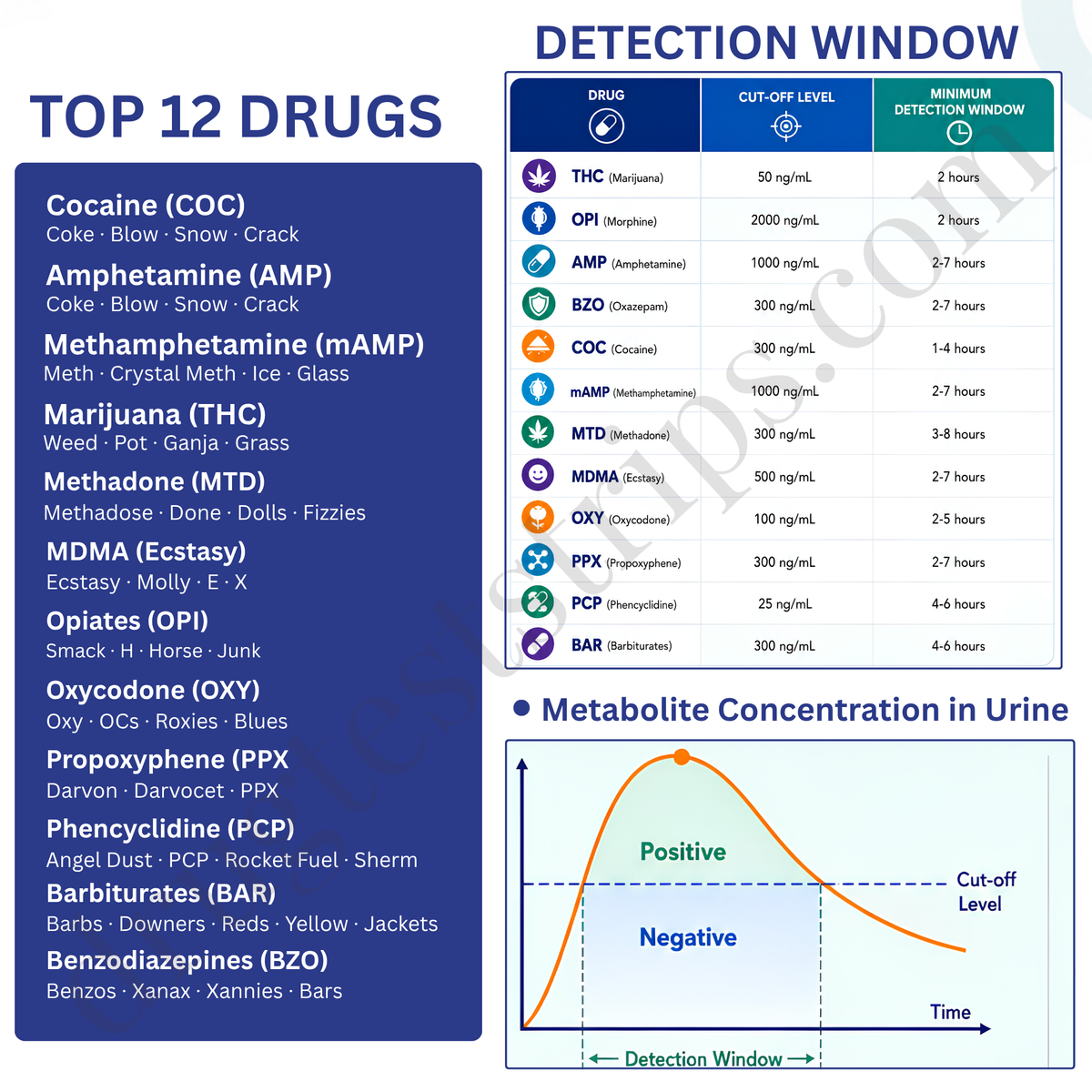
Drug detection times may vary depending on several factors, including:
A negative result indicates that the drug concentration is below the screening cutoff level. Any preliminary positive result should always be confirmed by an approved laboratory using GC-MS or LC-MS/MS
The 12 Panel Drug Test Card screens for the following substances:
Drug
Typical Detection Time
Cocaine (COC)
2–4 Days
Amphetamine (AMP)
2–4 Days
Methamphetamine (mAMP)
2–5 Days
Marijuana (THC)
3–30 Days
Methadone (MTD)
3–7 Days
MDMA (Ecstasy)
2–4 Days
Opiates (OPI)
2–4 Days
Oxycodone (OXY)
2–4 Days
Propoxyphene (PPX)
1–2 Days
Phencyclidine (PCP)
7–14 Days
Barbiturates (BAR)
2–15 Days
Benzodiazepines (BZO)
3–30 Days
Drug
Screening Cutoff
Cocaine (COC)
300 ng/mL
Amphetamine (AMP)
1,000 ng/mL
Methamphetamine (mAMP)
1,000 ng/mL
Marijuana (THC)
50 ng/mL
Methadone (MTD)
300 ng/mL
MDMA (Ecstasy)
500 ng/mL
Opiates (OPI)
2,000 ng/mL
Oxycodone (OXY)
100 ng/mL
Propoxyphene (PPX)
300 ng/mL
Phencyclidine (PCP)
25 ng/mL
Barbiturates (BAR)
300 ng/mL
Benzodiazepines (BZO)
300 ng/mL





12-Drug Test Card for COC/AMP/mAMP/THC/MTD/MDMA/OPI/OXY/PPX/PCP/BAR/BZO | Abbott DOA-1124-011T 25/Box

Sign up for updates from leading retailers


