

Log in
300 ng/mL (Urine)
Cocaine is a powerful central nervous system stimulant derived from the leaves of the coca plant. Although it has limited medical use in certain specialized procedures, it is primarily known as an illicit drug with a high potential for abuse and addiction. Cocaine produces an intense but short-lived feeling of euphoria by increasing dopamine levels in the brain, often leading users to take repeated doses.
People commonly use cocaine by snorting, smoking crack cocaine, or injecting it intravenously. Repeated use can rapidly lead to physical and psychological dependence.
Increased energy and alertness
Euphoria and overconfidence
Rapid heart rate
Elevated blood pressure
Decreased appetite
Anxiety and irritability
Restlessness
Strong drug cravings after the effects wear off
Long-term abuse may increase the risk of heart attack, stroke, depression, memory problems, and substance use disorder.
Coke, Blow, Snow, Flake, Crack, Rock, Yayo, Nose Candy, White, Dust.
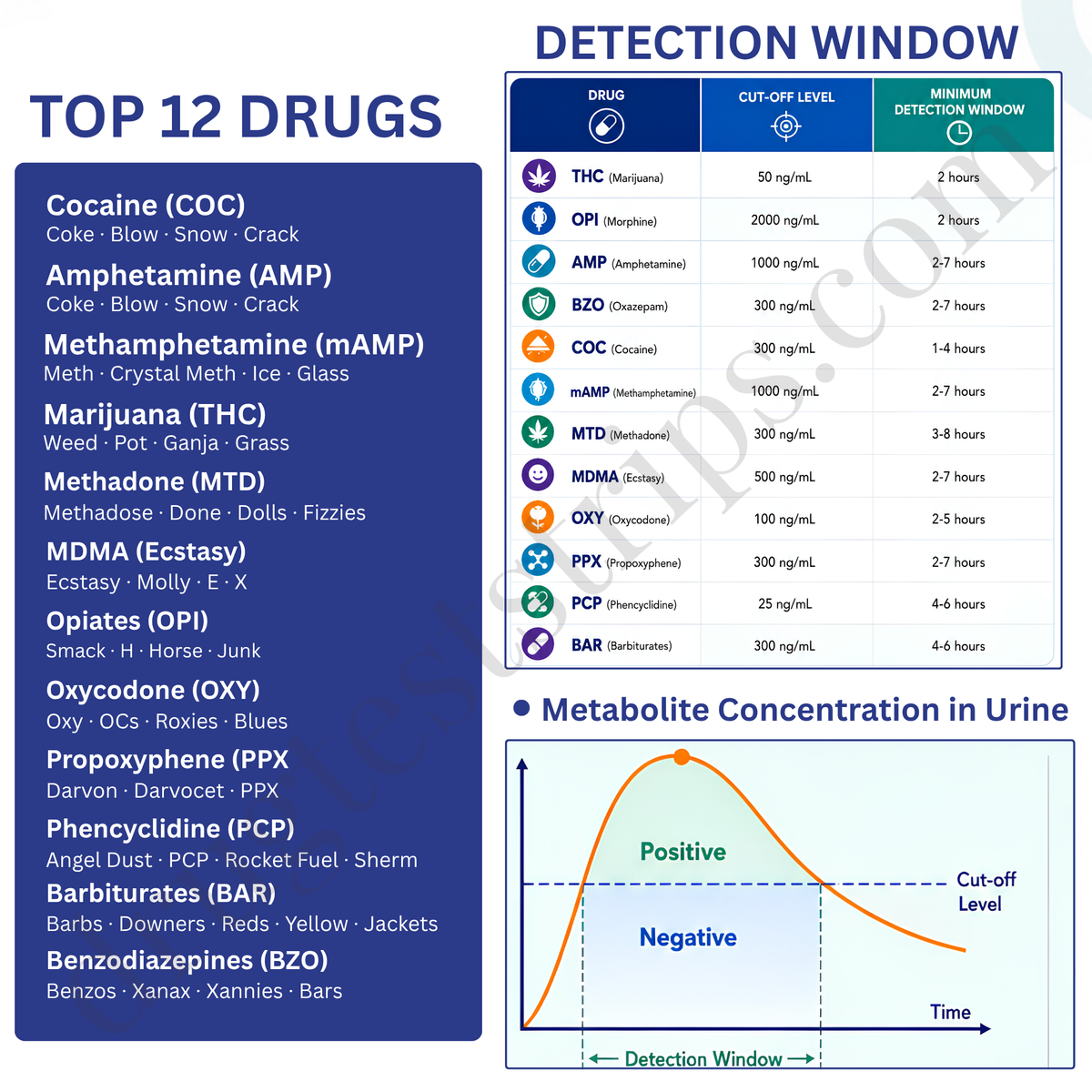
Cocaine metabolites are typically detectable in urine for 2–4 days after occasional use, although chronic or heavy users may remain positive for a longer period
1,000 ng/mL (Urine)
Methamphetamine, commonly known as meth, is a powerful and highly addictive central nervous system stimulant. It rapidly increases dopamine levels in the brain, producing intense feelings of euphoria, increased energy, and heightened alertness. Repeated use can quickly lead to physical dependence, psychological addiction, and serious long-term health complications.
Methamphetamine is commonly smoked, snorted, swallowed, or injected. Chronic use may damage the brain, cardiovascular system, and mental health.
Increased energy and alertness
Intense euphoria
Rapid heart rate
Elevated blood pressure
Decreased appetite
Insomnia
Anxiety and irritability
Aggressive behavior
Strong drug cravings after the effects wear off
Long-term abuse may lead to severe weight loss, memory impairment, paranoia, hallucinations, anxiety disorders, and permanent damage to the brain and nervous system.
Meth, Crystal Meth, Crystal, Ice, Glass, Tina, Speed, Crank, Chalk, Shabu.
Methamphetamine is typically detectable in urine for 2–5 days after use, although heavy or chronic users may remain positive for a longer period
50 ng/mL (Urine)
Marijuana, also known as cannabis, is one of the most commonly used psychoactive substances worldwide. Its primary active compound, Delta-9-tetrahydrocannabinol (THC), affects areas of the brain responsible for memory, coordination, judgment, and mood. While certain cannabis-derived medications are approved for limited medical conditions, recreational use can impair
cognitive function, reaction time, and motor skills, particularly when used frequently or in high doses.
Marijuana is commonly smoked, vaporized, or consumed in edible products. THC metabolites remain in the body longer than many other drugs, making marijuana detectable in urine for an extended period.
Relaxation and euphoria
Altered perception of time
Increased appetite
Impaired memory and concentration
Slower reaction time
Reduced coordination
Anxiety or paranoia
Difficulty making decisions
Long-term use may affect memory, learning ability, motivation, and overall cognitive performance, especially in adolescents and young adults.
Weed, Pot, Ganja, Grass, Mary Jane, Herb, Bud, Reefer, Blunt, Chronic.
THC metabolites are typically detectable in urine for 3–30 days, depending on frequency of use, body metabolism, and individual health factors
2,000 ng/mL (Urine).
Opiates are drugs naturally derived from the opium poppy and are commonly prescribed to relieve moderate to severe pain. This group includes substances such as morphine, codeine, heroin, and opium. Although many opioids have legitimate medical uses, misuse can result in dependence, addiction, respiratory depression, and overdose.
Opiates affect the central nervous system by binding to opioid receptors, producing pain relief, relaxation, and feelings of euphoria.
Pain relief
Relaxation
Drowsiness
Constricted pupils
Slowed breathing
Nausea
Reduced reaction time
Euphoria
Long-term misuse may lead to opioid dependence, withdrawal symptoms, overdose, and life-threatening respiratory complications.
Smack, H, Horse, Junk, Brown Sugar, China White, Black Tar, Dope, Skag.
Opiates are generally detectable in urine for 2–4 days after use, although certain prescription opioids may remain detectable for different periods
500 ng/mL (Urine).
MDMA (3,4-Methylenedioxymethamphetamine), commonly known as Ecstasy or Molly, is a synthetic psychoactive drug that acts as both a stimulant and a hallucinogen. It increases the activity of brain chemicals such as serotonin, dopamine, and norepinephrine, producing feelings of euphoria, emotional warmth, increased energy, and heightened sensory perception.
MDMA is commonly taken as tablets, capsules, or powder and is frequently associated with parties, concerts, and nightclubs. While users often seek its mood-enhancing effects, misuse can lead to dehydration, overheating, cardiovascular problems, and long-term effects on memory and mood.
Euphoria and emotional closeness
Increased energy and alertness
Enhanced sensory perception
Elevated body temperature
Increased heart rate
Jaw clenching and muscle tension
Anxiety or panic attacks
Confusion and poor judgment
Long-term or heavy use may contribute to memory impairment, depression, sleep disturbances, anxiety disorders, and damage to serotonin-producing nerve cells.
Ecstasy, Molly, E, X, XTC, Adam, Beans, Rolls, Disco Biscuits, Hug Drug.
MDMA is generally detectable in urine for 2–4 days after use, although detection times may vary depending on dosage, frequency of use, metabolism, and hydration
The 5 Panel Drug Test Card (COC/mAMP/THC/OPI/MDMA) provides a fast, reliable, and convenient method for screening five commonly abused drugs using a single urine sample. Its simple one-step procedure, rapid results, and multi-drug detection capability make it an excellent choice for workplace testing, healthcare facilities, rehabilitation centers, educational institutions, and confidential home use. As with all rapid drug screening devices, any preliminary positive result should be confirmed by a certified laboratory using GC-MS or LC-MS/MS before making clinical or legal decisions.
The 5 Panel Drug Test Card (COC/mAMP/THC/OPI/MDMA) is a rapid urine drug screening device designed to detect five commonly abused drugs in a single test. Using advanced lateral flow immunoassay technology, the test delivers fast, reliable, and easy-to-read results in approximately 5 minutes, making it ideal for workplace, clinical, and personal drug screening.
This multi-drug test simultaneously detects Cocaine (COC), Methamphetamine (mAMP), Marijuana (THC), Opiates (OPI), and MDMA (Ecstasy) at their established screening cutoff concentrations. By testing multiple drug classes with a single urine sample, it provides an efficient and cost-effective screening solution.
The 5 Panel Drug Test Card is widely used for pre-employment screening, workplace drug testing, random employee testing, rehabilitation programs, healthcare facilities, educational institutions, law enforcement agencies, pain management clinics, and confidential at-home testing.
Negative results are available in approximately 5 minutes. Any preliminary positive result should be confirmed by a certified laboratory using Gas Chromatography-Mass Spectrometry (GC-MS) or Liquid Chromatography-Tandem Mass Spectrometry (LC-MS/MS)
Urine drug testing is one of the most widely used methods for detecting recent drug use because it is non-invasive, affordable, reliable, and easy to perform. Instead of detecting the drug itself, most urine drug tests identify drug metabolites that remain in the body after the drug has been processed.
The 5 Panel Drug Test Card screens for five drugs frequently included in workplace and clinical drug testing programs. It provides a fast preliminary screening result and is intended for use in occupational health, rehabilitation, healthcare, educational, and personal testing environments.
Several factors can influence how long a drug remains detectable in urine, including:
A negative result generally indicates that the drug concentration is below the established cutoff level, while a preliminary positive result indicates that further laboratory confirmation is recommended
The 5 Panel Drug Test Card screens for the following substances:
Drug
Typical Detection Time
Cocaine (COC)
2–4 Days
Methamphetamine (mAMP)
2–5 Days
Marijuana (THC)
3–30 Days
Opiates (OPI)
2–4 Days
MDMA (Ecstasy)
2–4 Days
Drug
Screening Cutoff
Cocaine (COC)
300 ng/mL
Methamphetamine (mAMP)
1,000 ng/mL
Marijuana (THC)
50 ng/mL
Opiates (OPI)
2,000 ng/mL
MDMA (Ecstasy)
500 ng/m





5 Panel Drug Test Card for COC/mAMP/THC/OPI/MDMA | Abbott DOA-1554 25/Box

Sign up for updates from leading retailers


