

Log in
The iCup™ Urine Test Drug Screen Cup utilizes lateral flow chromatographic immunoassay technology to detect specific drugs and their metabolites in human urine. Once the urine specimen is collected directly into the cup, the sample migrates across individual test strips containing antibodies specific to each targeted drug analyte.
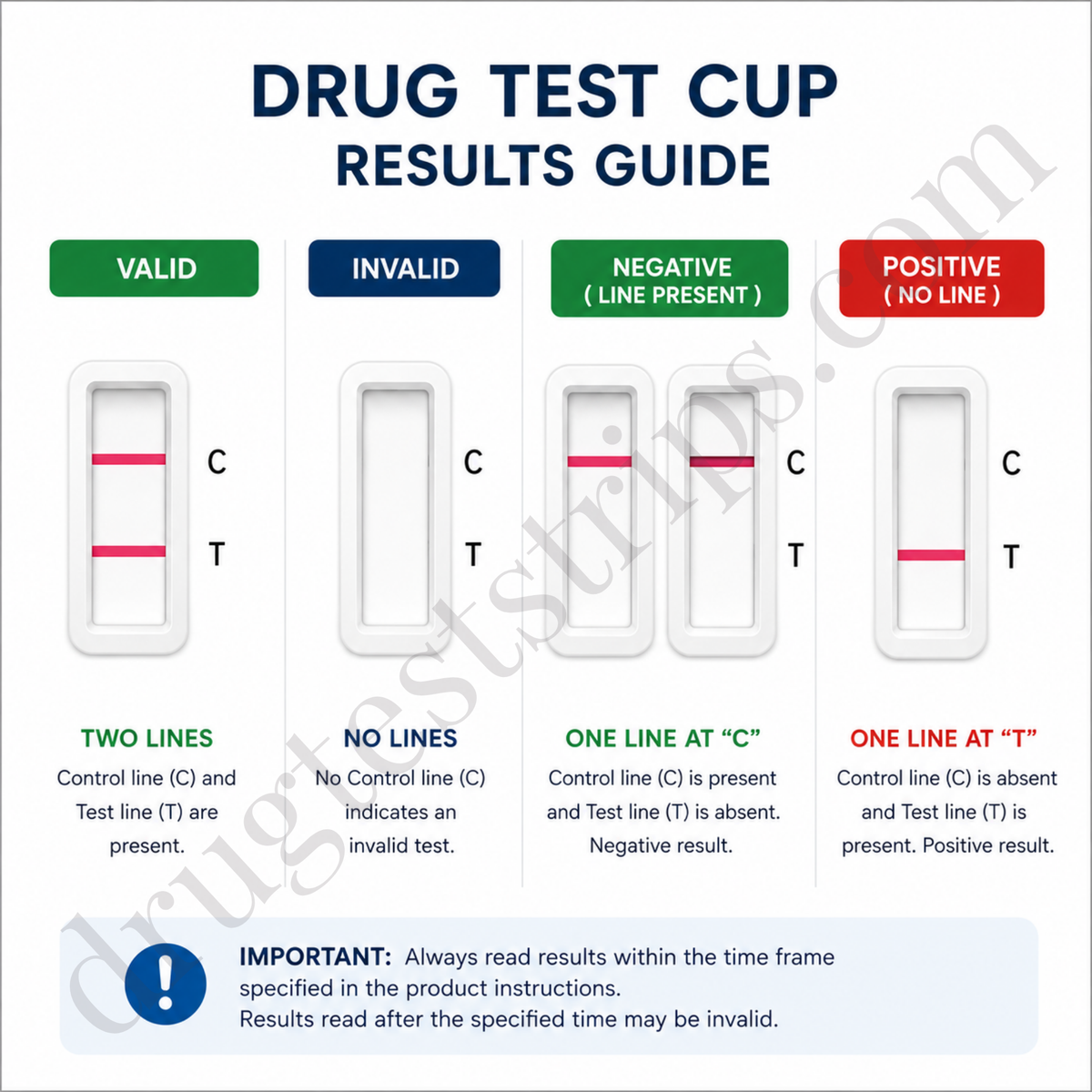
If the concentration of a drug is below the designated screening cutoff level, both the Control (C) and Test (T) lines appear, indicating a negative result. If the concentration is equal to or greater than the cutoff level, only the Control (C) line appears, indicating a preliminary positive result.
The integrated Specimen Validity Testing (SVT) simultaneously evaluates Oxidants (OX), Creatinine (CR), and pH to help determine whether the urine specimen has been diluted or adulterated before interpreting the drug screening results.
Because this is a preliminary screening test, all preliminary positive results should be confirmed using Gas Chromatography/Mass Spectrometry (GC-MS) or Liquid Chromatography–Mass Spectrometry (LC-MS/MS) before medical, legal, or employment decisions are made
Amphetamine is a prescription central nervous system (CNS) stimulant commonly used to treat Attention Deficit Hyperactivity Disorder (ADHD) and narcolepsy. It increases alertness, concentration, and energy when taken as prescribed. However, amphetamines are also frequently misused for their stimulating effects, making them one of the most commonly screened drugs in workplace and clinical drug testing.
Increased energy
Heightened alertness
Elevated mood
Increased heart rate
Reduced appetite
Restlessness
Anxiety
Difficulty sleeping
Long-term misuse may result in dependence, cardiovascular complications, aggression, and mental health disorders.
Speed, Uppers, Bennies, Black Beauties, Pep Pills, Dexies, Addys.
Amphetamine is generally detectable in urine for 1–3 days after use
Barbiturates are medications that depress the activity of the central nervous system. They are prescribed to treat seizure disorders, insomnia, anxiety, and are sometimes used as anesthetics. Although less commonly prescribed today, they remain drugs with a significant potential for misuse and overdose.
Relaxation
Sedation
Drowsiness
Slowed breathing
Poor coordination
Slurred speech
Dizziness
Confusion
Long-term misuse may lead to dependence, respiratory depression, and overdose.
Barbs, Downers, Reds, Blues, Yellow Jackets, Rainbows.
Barbiturates may remain detectable in urine for 2–15 days, depending on the medication used.
Benzodiazepines are prescription medications used to treat anxiety disorders, insomnia, panic attacks, muscle spasms, and seizures. They slow activity in the brain, producing calming and sedative effects.
Although effective when used appropriately, prolonged use or misuse may result in tolerance, physical dependence, and addiction.
Calmness
Relaxation
Drowsiness
Muscle relaxation
Reduced anxiety
Slowed reflexes
Memory impairment
Poor coordination
Long-term misuse increases the risk of dependence and overdose, especially when combined with alcohol or opioids.
Benzos, Xannies, Bars, Vallies, Tranks, Downers.
Benzodiazepines are generally detectable in urine for 2–7 days, although long-acting medications may remain detectable for several weeks.
Cocaine is a powerful central nervous system stimulant derived from the coca plant. It produces intense but short-lived feelings of euphoria, confidence, and increased energy by rapidly increasing dopamine levels in the brain. Cocaine has a high potential for abuse and addiction and is routinely included in workplace, clinical, and forensic drug testing panels.
Increased energy
Euphoria
Heightened alertness
Rapid heartbeat
Elevated blood pressure
Reduced appetite
Anxiety
Restlessness
Long-term misuse may contribute to heart attack, stroke, depression, and substance dependence.
Coke, Blow, Snow, Crack, Rock, Flake, Yayo, White, Dust.
Cocaine metabolites are generally detectable in urine for 2–4 days after use
Methamphetamine is a highly addictive synthetic stimulant that affects the brain and central nervous system. It produces intense feelings of euphoria, increased energy, and heightened alertness. Because of its powerful stimulant effects, methamphetamine has a high risk of abuse and long-term addiction.
Intense euphoria
Increased energy
Heightened alertness
Rapid heartbeat
Elevated blood pressure
Reduced appetite
Anxiety
Aggressive behavior
Long-term misuse may result in severe weight loss, hallucinations, paranoia, memory impairment, and permanent brain damage.
Meth, Crystal Meth, Crystal, Ice, Glass, Tina.
Methamphetamine is generally detectable in urine for 2–4 days after use
Methadone is a long-acting synthetic opioid prescribed for the treatment of chronic pain and opioid use disorder. It helps reduce opioid cravings and withdrawal symptoms in medication-assisted treatment (MAT) programs while providing long-lasting pain relief for certain patients.
Although methadone is an effective treatment medication, it also carries a risk of misuse, dependence, and overdose. For this reason, methadone is commonly included in workplace, rehabilitation, and clinical drug testing panels.
Pain relief
Relaxation
Reduced opioid cravings
Drowsiness
Slowed breathing
Sweating
Dizziness
Nausea
Improper use may result in respiratory depression, overdose, irregular heartbeat, and dependence.
Fizzies, Dollies, Juice, Amidone, Methadose.
Methadone is generally detectable in urine for 3–7 days after use.
Opiates are a group of drugs naturally derived from the opium poppy, including morphine and codeine. They are commonly prescribed to relieve moderate to severe pain but also have a high potential for misuse because of their pain-relieving and euphoric effects.
Repeated misuse can quickly lead to tolerance, physical dependence, addiction, and life-threatening respiratory depression. Opiates are among the most commonly screened substances in workplace, clinical, and rehabilitation drug testing programs.
Pain relief
Euphoria
Relaxation
Drowsiness
Constricted pupils
Slowed breathing
Nausea
Constipation
Long-term misuse may result in opioid dependence, overdose, respiratory failure, coma, and death.
Smack, Dope, H, Horse, Junk, Mud, Big O.
Opiates are generally detectable in urine for 2–3 days, depending on the specific opioid and frequency of use
Oxycodone is a prescription opioid analgesic used to treat moderate to severe pain caused by injury, surgery, or chronic medical conditions. Although highly effective when used as directed, oxycodone has a significant potential for misuse because it can produce feelings of relaxation and euphoria.
Long-term misuse may lead to tolerance, physical dependence, addiction, and overdose, making oxycodone an important drug included in workplace and clinical drug testing panels.
Pain relief
Relaxation
Euphoria
Drowsiness
Slowed breathing
Constricted pupils
Nausea
Constipation
Long-term misuse may increase the risk of dependence, respiratory depression, overdose, and death.
Oxy, OC, Roxies, Percs, Blues, Hillbilly Heroin.
Oxycodone is generally detectable in urine for 2–4 days after use
Propoxyphene is a synthetic opioid pain reliever that was previously prescribed for the treatment of mild to moderate pain. Due to concerns about serious heart rhythm abnormalities and an increased risk of fatal overdose, it has been withdrawn from many countries. However, screening for propoxyphene may still be required in workplace, forensic, and clinical drug testing programs.
Pain relief
Relaxation
Drowsiness
Dizziness
Nausea
Slowed breathing
Confusion
Impaired coordination
Improper use may lead to respiratory depression, heart rhythm disturbances, overdose, and death.
Darvon, Darvocet, PPX.
Propoxyphene is typically detectable in urine for 1–2 days after use
Marijuana is a psychoactive substance obtained from the Cannabis sativa plant. Its primary active ingredient, Delta-9-tetrahydrocannabinol (THC), affects cannabinoid receptors in the brain, producing feelings of relaxation, altered perception, and euphoria.
Marijuana may be smoked, vaporized, or consumed in edible products. Although legalized for medical or recreational use in some regions, THC remains one of the most commonly screened substances in workplace, clinical, and forensic drug testing programs.
Relaxation
Euphoria
Altered perception
Increased appetite
Dry mouth
Red eyes
Slowed reaction time
Impaired coordination
Frequent or heavy use may contribute to memory impairment, anxiety, reduced concentration, and cannabis dependence.
Weed, Pot, Cannabis, Grass, Herb, Ganja, Mary Jane, Hash.
THC is generally detectable in urine for 3–30 days, depending on the frequency of use. Chronic users may remain positive for several weeks.
The iCup™ Urine Test Drug Screen Cup (10 Panel + SVT) provides a fast, accurate, and reliable solution for professional on-site urine drug screening. Designed to detect 10 commonly abused drugs from a single urine specimen, the device also includes Specimen Validity Testing (SVT) for Oxidants (OX), Creatinine (CR), and pH, helping verify specimen integrity before interpreting the results. With preliminary results available in approximately 5 minutes, the iCup™ is ideal for workplace drug testing, healthcare facilities, rehabilitation centers, occupational health clinics, and forensic testing programs. As with all rapid immunoassay screening devices, any preliminary positive result should be confirmed using Gas Chromatography/Mass Spectrometry (GC-MS) or Liquid Chromatography–Mass Spectrometry (LC-MS/MS) before medical, legal, or employment decisions are made.
The iCup™ Urine Test Drug Screen Cup is a self-contained, multi-panel urine drug screening device designed to provide rapid, accurate, and reliable preliminary detection of 10 commonly abused drugs from a single urine specimen. Combining specimen collection and testing into one integrated device, the iCup™ minimizes specimen handling, reduces contamination risks, and streamlines the drug testing process for healthcare professionals and workplace testing programs.
Using advanced lateral flow chromatographic immunoassay technology, the iCup™ delivers preliminary qualitative results in approximately 5 minutes without requiring additional laboratory equipment. Its simple one-step operation makes it an excellent choice for hospitals, physician offices, occupational health clinics, rehabilitation centers, correctional facilities, and workplace drug testing programs.
This 10 Panel + SVT configuration screens for 10 commonly abused drugs while also incorporating Specimen Validity Testing (SVT) to evaluate urine specimen integrity. The integrated validity checks measure Oxidants (OX), Creatinine (CR), and pH, helping identify adulterated or abnormal urine specimens before interpreting the drug screening results.
Designed for professional use, the iCup™ provides a hygienic, efficient, and dependable solution for rapid on-site urine drug testing across clinical, occupational, forensic, and rehabilitation settings
This 10 Panel + SVT configuration screens for:
This configuration also evaluates urine specimen integrity by testing:
Drug
Typical Detection Window
Amphetamine (AMP)
1–3 Days
Barbiturates (BAR)
2–15 Days
Benzodiazepines (BZO)
2–7 Days*
Cocaine (COC)
2–4 Days
Methamphetamine (MET)
2–4 Days
Methadone (MTD)
3–7 Days
Opiates (OPI)
2–3 Days
Oxycodone (OXY)
2–4 Days
Propoxyphene (PPX)
1–2 Days
Marijuana (THC)
3–30 Days
*Long-acting benzodiazepines may remain detectable for several weeks
A colored line appears in both the Control (C) region and the Test (T) region for each drug being tested. Even a faint line in the Test (T) region should be interpreted as a negative result.
Only one colored line appears in the Control (C) region while no line appears in the corresponding Test (T) region. This indicates that the drug concentration may be at or above the established screening cutoff level. Any preliminary positive result should be confirmed using Gas Chromatography/Mass Spectrometry (GC-MS) or Liquid Chromatography–Mass Spectrometry (LC-MS/MS) before medical, legal, or employment decisions are made.
If the Control (C) line does not appear, the test is invalid regardless of whether a Test line appears. Repeat the test using a new device and a fresh urine specimen
This 10 Panel + SVT configuration also evaluates urine specimen integrity by measuring:
Detects oxidizing chemicals that may be added to urine in an attempt to interfere with drug test results or mask the presence of drugs.
Measures the natural creatinine concentration in urine. Low creatinine levels may indicate a diluted or substituted urine specimen.
Measures the acidity or alkalinity of the urine sample. Abnormal pH values may suggest specimen adulteration or contamination.
These validity parameters help improve confidence in preliminary drug screening by identifying specimens that may have been altered before testing





iCup™ 10 Panel + SVT Urine Drug Screen Cup | Abbott | Amphetamine (AMP) Barbiturates (BAR) Benzodiazepines (BZO) Cocaine (COC) Methamphetamine (MET) Methadone (MTD) Opiates (OPI) Oxycodone (OXY) Propoxyphene (PPX) Marijuana (THC) | I-DUE-1107-141 25/Box

Sign up for updates from leading retailers


